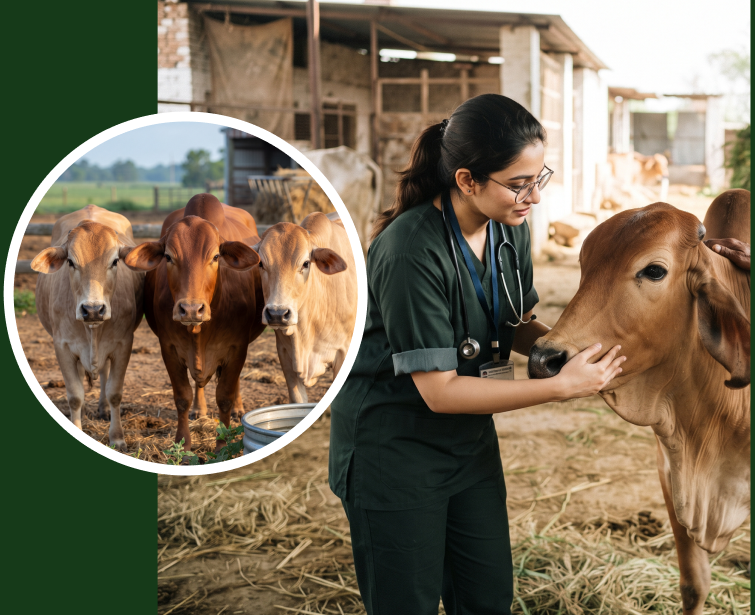
Cattle are prey species by nature, meaning their survival instinct drives them to conceal signs of pain or weakness until a disease has progressed significantly. Recognizing subtle early indicators allows farm workers to intervene before irreversible damage occurs.### 1. Rumination & Cud-Chewing RateA healthy dairy cow spends 7 to 8 hours daily chewing her cud (roughly 50 to 60 chews per bolus). - A sudden drop in rumination time is the earliest and most reliable warning of ruminal acidosis, ketosis, or systemic fever.- Modern automated neck collars or daily observation during rest periods can reveal rumination drops 24 to 48 hours before visible milk loss.### 2. Ear Posture and Eye Brightness- **Drooping, Cold Ears:** Often indicates early subclinical hypocalcemia (milk fever) or low blood circulation associated with toxemia.- **Sunken, Dull Eyes:** Indicates severe dehydration, electrolyte depletion, or endotoxemia.- **Dry Muzzle:** Healthy cattle display moist muzzles with clear beads of condensation. A dry, crusted muzzle signals elevated body temperature.### 3. Gait & Weight ShiftingReluctance to move, arched back posture while standing, or frequent weight shifting between hind legs indicates subclinical laminitis, sole bruising, or internal abdominal discomfort.### SummaryTrain your herd staff to observe cattle during non-feeding hours. Identifying and reporting these early signs ensures prompt treatment and rapid recovery.
- Proactive herd monitoring and scheduled veterinary checkups consistently decrease emergency mortality rates by over 40%.
- Balanced nutritional supplements containing bioavailable chelated minerals, electrolytes, and calcium prevent metabolic drops in high-yield dairy cows.
- Strict biosecurity and cold-chain vaccine maintenance ensure optimum efficacy across changing climate seasons.